

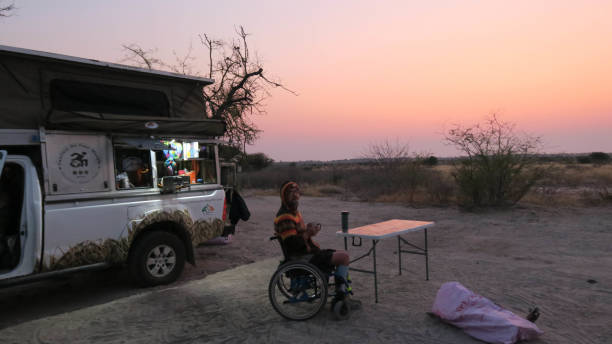
The Central Kalahari Game Reserve is one of Botswana’s most remarkable wilderness areas, home to black-maned lions, cheetah, springbok, gemsbok, ostrich, and wildebeest. It is also the second-largest wildlife reserve in the world, offering rare glimpses of life in a remote desert landscape.
For those considering a broader African adventure, explore this central African safari resource to plan your journey. And for a closer look at this vast desert expanse, the Kalahari Desert safari guide provides everything you need to experience its golden pans and endless horizons.
Kalahari Plains Camp: The Heart of the Reserve
Kalahari Plains Camp sits quietly amid open grasslands and ancient pans, offering uninterrupted views across the horizon. Here, lions patrol the savannah and herds of gemsbok and springbok graze in the distance. Early mornings are particularly striking, as the sun illuminates the landscape and casts long shadows over the plains.
A walk with a guide can reveal hidden tracks and secret watering holes, providing insight into the rhythms of life in the Kalahari. Time slows here, and every moment encourages a closer look at the desert’s delicate balance of life.
Tau Pan Camp: Intimate Desert Immersion
Tau Pan Camp offers an intimate experience deep in the reserve, with tented suites positioned around a central pan. From the deck, you might see elephants quenching their thirst or a cheetah lounging under a sparse tree.
The dry season transforms the pan into a mirror for the sky, reflecting the colours of sunrise and sunset with breathtaking clarity. Wildlife moves with purpose, and the quiet encourages visitors to observe every detail, from the flick of a tail to the shimmer of sand beneath hooves. The remoteness here makes it easy to feel completely immersed in the desert’s rhythm.
Wildlife in the Kalahari: A Photographer’s Paradise
The Central Kalahari Game Reserve is a haven for photographers. Black-maned lions are perhaps the most iconic, their dark fur contrasting sharply with golden grasses. Cheetah can often be found stalking across the pans, while herds of springbok leap in elegant unison. Birds such as ostrich and sociable weavers add movement and life to every shot.
For anyone with a camera, the constantly shifting light of the desert creates an endless series of opportunities to capture dramatic landscapes, intimate wildlife moments, and the raw beauty of Botswana’s wilderness.
The Seasonal Flow of Life
Seasons shape the Kalahari dramatically. During the rains, grasses turn green, and ephemeral waterholes appear, attracting zebras, wildebeest, and a diversity of birds. In the dry months, animals congregate around permanent water sources, making game viewing easier and more predictable.
Each visit reveals something new, whether it is the call of a distant lion at dusk or the silent glide of a secretary bird across the plains. The quiet intensity of the Kalahari leaves a lasting impression on every visitor.
Experiences Beyond Wildlife
While wildlife dominates the experience, the reserve offers other ways to connect with the desert. Guided walks introduce visitors to ancient San rock art and the traditional knowledge of plants and tracking. Evenings at the camps invite stargazing under an unbroken canopy of stars.
The combination of solitude, natural beauty, and accessible knowledge of the ecosystem makes every stay both relaxing and educational. Each camp is designed to enhance the connection with the environment while maintaining comfort and understated luxury.
Photography and Inspiration
Whether capturing wide landscapes or intimate animal portraits, the Kalahari inspires creativity. Early mornings and late afternoons produce soft light ideal for photographing wildlife and desert scenery.
The wide, open spaces allow for uninterrupted views, and the lack of crowds ensures photographers can work freely. From the shimmer of dust in the sun to the stillness of a solitary elephant at a pan, every frame tells a story unique to this remote wilderness.
Planning Your Kalahari Adventure
A typical stay in the Central Kalahari Game Reserve ranges from three to seven nights, offering enough time to experience both Kalahari Plains and Tau Pan Camps, or to explore other areas nearby. Travel is best arranged during Botswana’s dry season from May to October for the most reliable wildlife sightings. Whether it is a solo journey, a photography-focused trip, or a shared safari with friends, the Kalahari offers space to move, think, and reflect away from the bustle of modern life.
Final Thoughts: The Magic of the Kalahari
Visiting the Central Kalahari Game Reserve is an encounter with a landscape both vast and intimate. Each pan, each animal, each breeze contributes to the reserve’s rhythm. Time slows, senses sharpen, and a profound sense of presence emerges.
The desert’s stark beauty, its raw wildlife encounters, and its peaceful isolation combine to create an unforgettable safari experience. Every visit is an opportunity to experience life in one of Africa’s most extraordinary corners, leaving memories that last long after the journey ends.
